 ×

During high-voltage transformer testing, centralized control of test equipment, monitoring of test status, data acquisition, and test report management are essential components of a testing system. To meet the control requirements of high-voltage transformer test systems, Nanke Electric has independently developed dedicated intelligent test software, drawing on its extensive experience in intelligent test system software development. The software enables remote operation of test equipment, monitoring of testing procedures, and test data management, helping transformer manufacturers optimize their testing workflows.
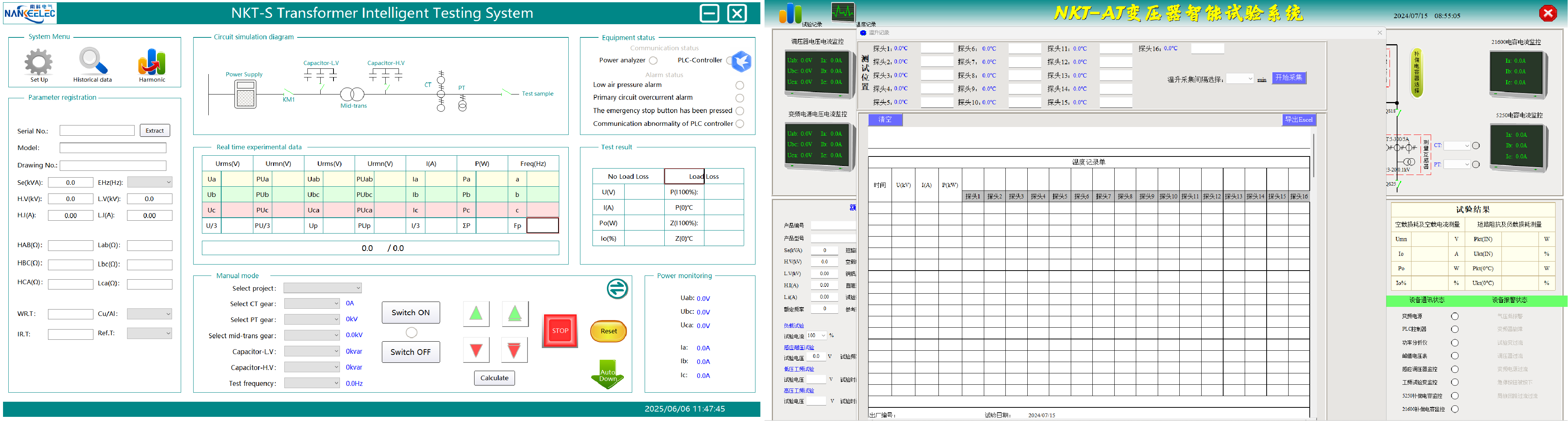
Drawing on years of experience in intelligent test system software development, Nanke Electric has independently developed dedicated intelligent test software specifically designed to meet the control requirements of high-voltage transformer test systems.
The system enables remote operation through host computer software and communicates with test instruments via LAN connections for the exchange of control commands and test data. This arrangement separates the high-voltage primary test equipment from the low-voltage control and operating area, helping protect test personnel during operation.
A primary system simulation diagram is also displayed at the top of the software interface. During testing, operators can monitor voltage and current paths in real time, allowing them to gain a clearer understanding of the configuration and operating principles of the entire test system.
The system adopts an industrial control computer as the host computer and a PLC as the lower-level controller. The automatic remote control console mainly consists of human-machine interaction, a control center, precision measurement, parameter acquisition, power supply processing, communication modules, relay outputs, variable-frequency speed control, digital-to-analog conversion, and protection systems.
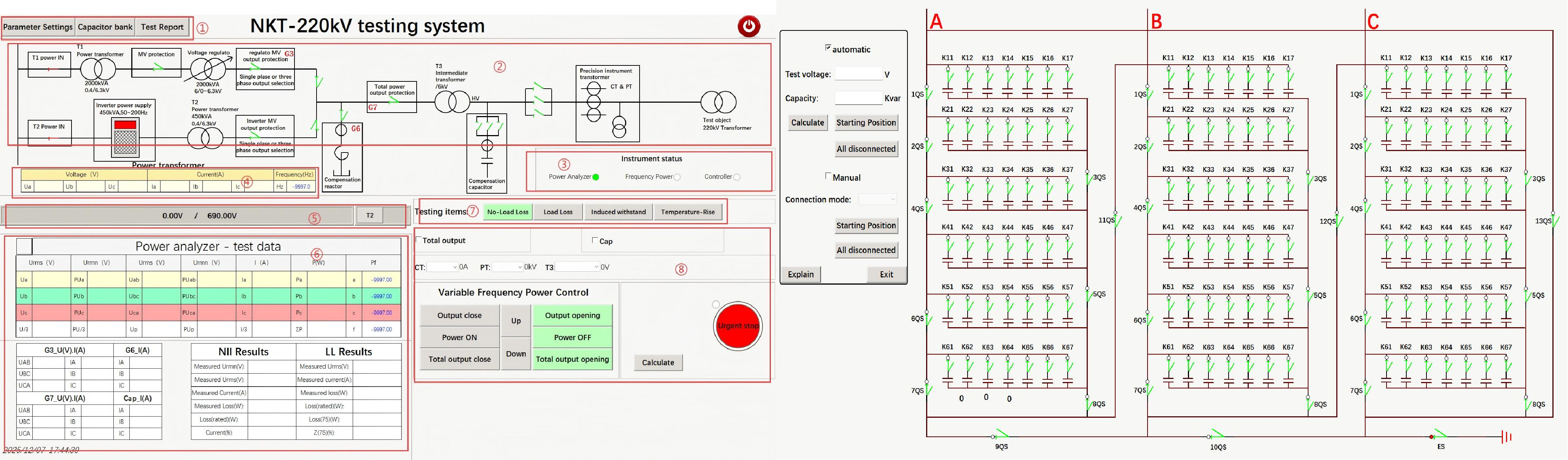
Load loss testing is used as an example to illustrate the remote operation procedure.
Based on the high-voltage rated current of the transformer under test, the operator selects the appropriate intermediate transformer range and current transformer range through the test interface. The appropriate voltage transformer range is then selected according to the impedance voltage of the transformer under test.
Next, the operator selects the required compensation capacitor voltage and capacity through the capacitor compensation interface. The system automatically closes the capacitor bank.
After completing these settings, the operator clicks the circuit closing button, and the system automatically closes the test circuit. The operator can monitor the circuit closing status through the primary system simulation diagram.
Once the circuit is closed, the operator clicks the voltage increase button to raise the current to the required test value. After the target current is reached, the operator clicks the calculation button. The system automatically converts the test results to the corresponding standard reference temperature and displays the calculated data in the designated data fields. The test data are also saved automatically.
Upon completion of the test, the operator clicks the automatic voltage reduction button. The system automatically reduces the voltage and performs the circuit opening operation.
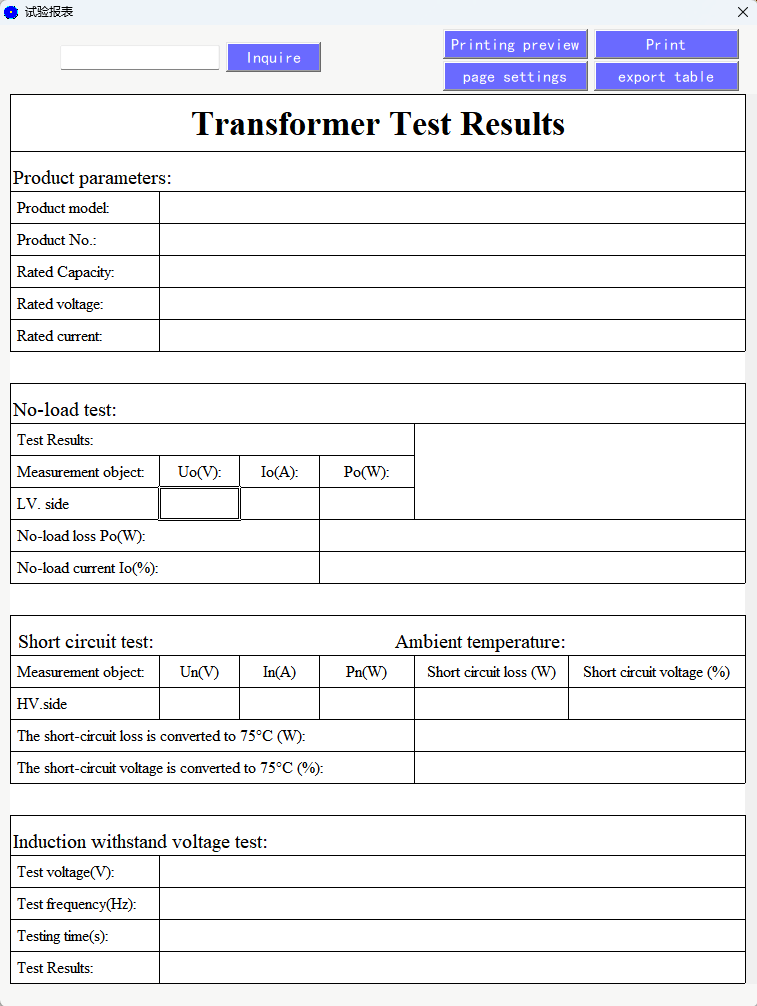
The software provides test report generation and management functions. Reports can be generated automatically according to test completion status, preset times, or specific test stages. Once a report is generated, the system notifies the operator and automatically saves it to a designated directory, making subsequent retrieval and management more convenient.
The system can automatically generate corresponding test reports according to preset report generation times or specific test stages and save them to a designated directory, reducing the workload associated with manual report preparation and storage.
Operators can also generate reports manually when required.
Users can select the report type and corresponding template, specify the data source (a test task or a designated time period), and select the test items to be included. The software then generates and displays a report preview.
If test data are incomplete or a report template is damaged, the system provides corresponding notifications to help operators identify and address the issues.
The software provides standard test report templates covering routine test reports and type test reports.
Routine test reports include no-load tests, load loss tests, insulation tests, DC resistance tests, and other relevant test items. Type test reports include temperature rise tests, short-circuit withstand tests, lightning impulse tests, and other relevant test items.
The report templates contain predefined sections covering test standards and references, equipment specifications, test environment, test instruments, test data, result evaluation, and conclusions.
The software also supports adjustments to template details according to differences in transformer models, helping accommodate different reporting requirements.
Intelligent test software is an important component of Nanke Electric's intelligent transformer test systems. Through its independently developed software, Nanke Electric integrates remote operation of test equipment, monitoring of testing procedures, data acquisition, and test report management, providing dedicated control support for high-voltage transformer test systems.
Nanke Electric continues to focus on the testing requirements of transformer manufacturers, advancing the development and application of intelligent transformer test systems while providing corresponding testing systems and technical services.
For more information about Nanke Electric's products, please visit our official website:


 EN

